Subjects, terms, and your weekly rhythm
Planner is where the year gets its shape. All of it is optional, all of it is editable, and none of it is ever compared against what actually happened. Set up as much or as little as you find useful.
Subjects
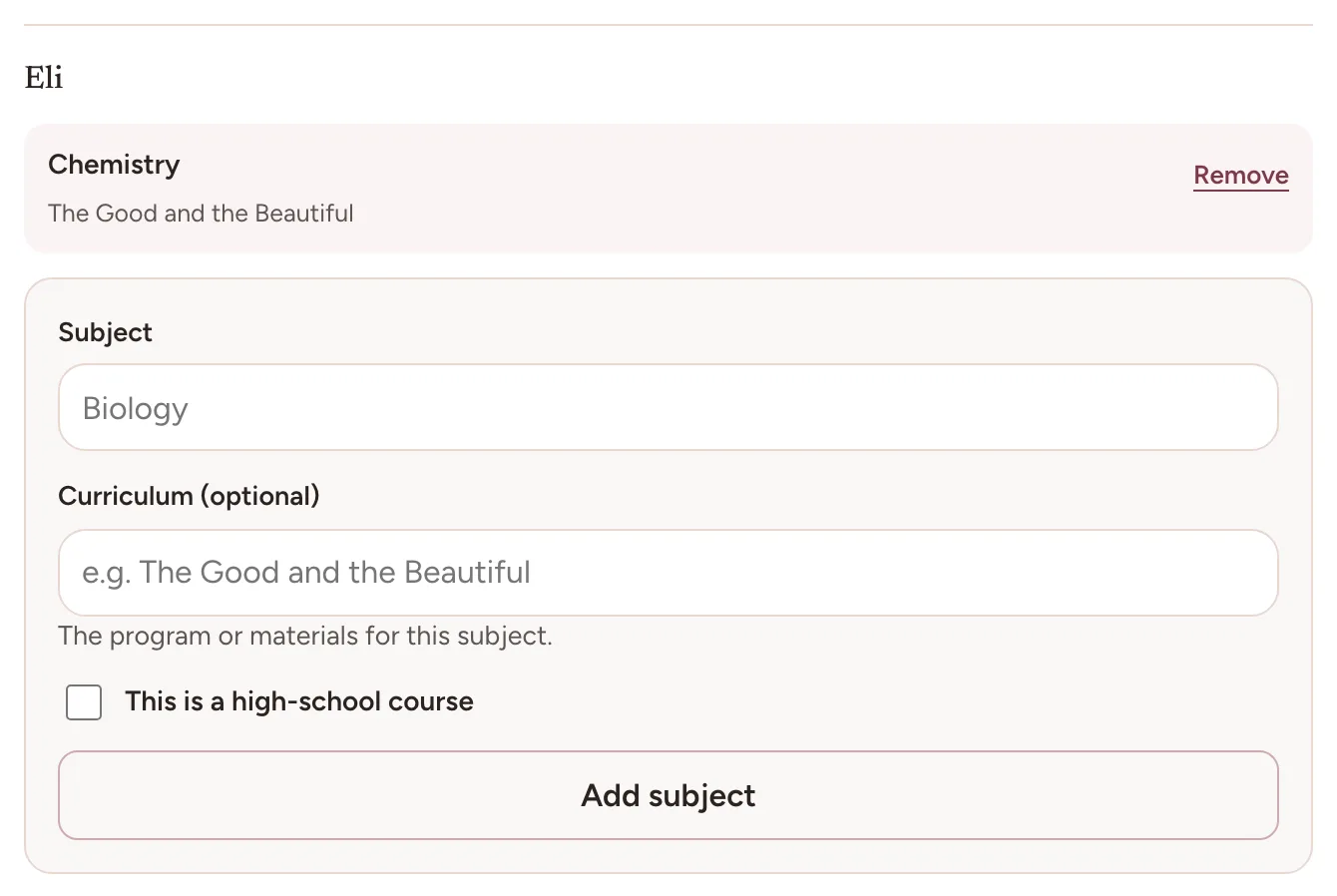
Subjects are per child and per year. Open Planner and add them under Subjects. Each one asks for:
A name. Whatever you call it at home. Biology, Reading, Nature Study, Piano. There’s no approved list.
Curriculum, optional. The program or materials you’re using. Worth filling in if you might ever need to say what you taught from, because it appears on records later and is tedious to reconstruct.
Credits, for high schoolers only. If the child is in high school you can mark a subject as a high-school course and give it a credit value. That’s what makes it appear on a transcript with credits and count towards a GPA. Younger children don’t see any of this, on purpose.
Terms and breaks
Terms divide the year into the pieces you think in: two semesters, four quarters, six-week blocks, whatever matches how you work. Breaks mark the days you’re not schooling, and days inside a break show as a day off rather than as a gap in the record.
Both are conveniences rather than rules. A capture saved on a day you’d marked as a break still saves and still counts, because sometimes the day goes differently than planned and the record should reflect the day, not the plan.
Weekly rhythm
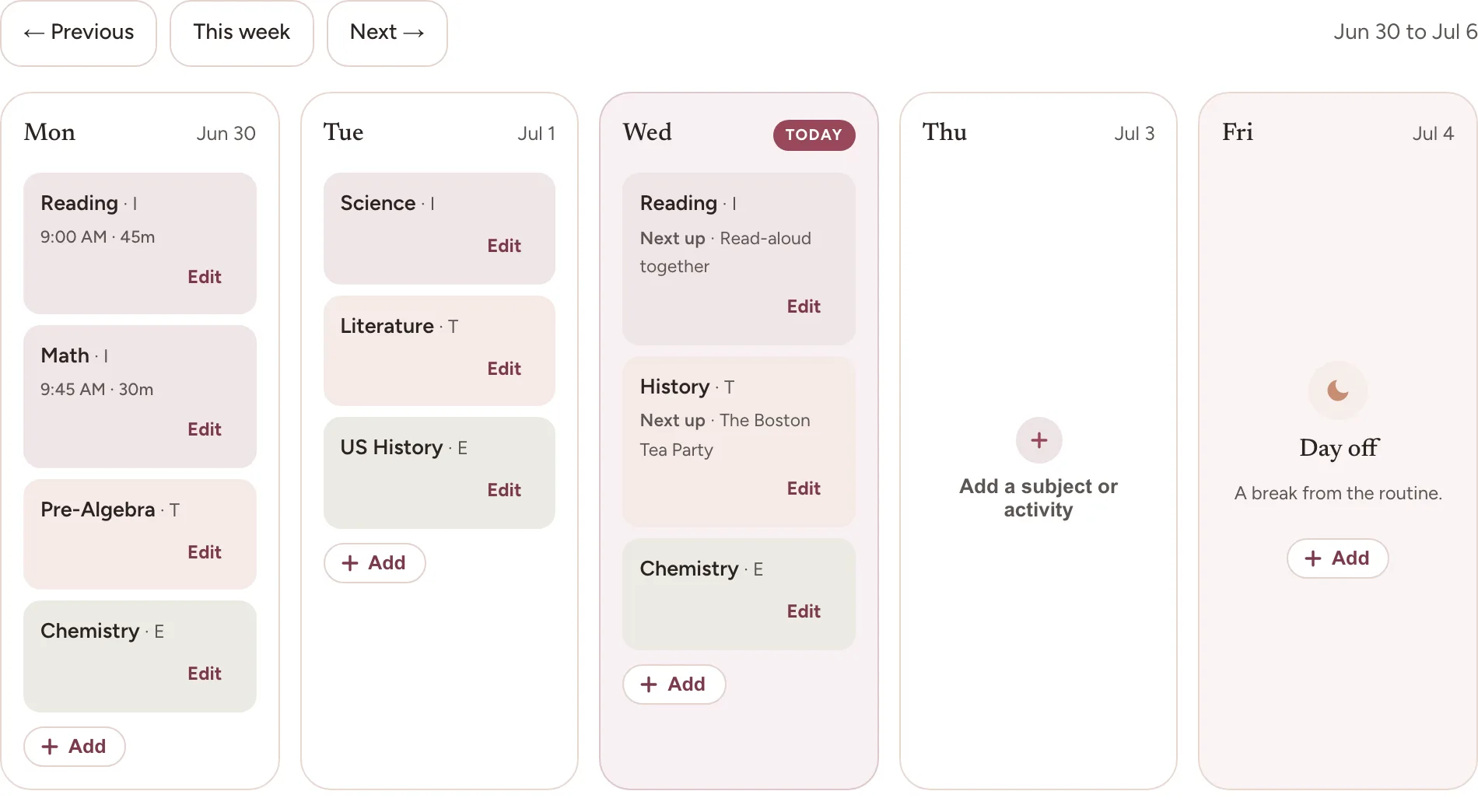
Your rhythm is the ordinary shape of a week: which subjects usually happen on which days. Set it once in Planner and the week view fills in with it, so you’re reading a familiar week rather than an empty grid.
You can also build a single day directly in the week view without touching the rhythm, which is the right tool when one Tuesday is unusual.
Why a planned block is never marked missed
A planned block that you never captured against is rendered plainly. It isn’t red, it isn’t labelled overdue, and it isn’t subtracted from anything. Plans and captures are kept as separate records and are never joined together to produce a shortfall.
This is a deliberate design decision rather than a feature we haven’t built. A planner that quietly scores you against your own optimism in August is a planner you stop opening in November, and the record it was keeping stops too.
Lesson outlines
If you keep an outline for a subject, it’s a list you write and tick off. The app doesn’t spread it across dates, generate a schedule from it, or work out whether you’re behind. You can name which outline item a given day was, one day at a time. If that day passes without being ticked, the item simply returns to the list rather than becoming something you missed.
Frequently asked questions
What happens if we do not follow the weekly rhythm? Nothing at all. A planned block you never captured against is rendered plainly, never as missed or overdue, and plans and captures are kept as separate records that are never joined to produce a shortfall.
Do I have to add terms and breaks? No. Both are conveniences for your own reading of the year. A capture saved on a day you had marked as a break still saves and still counts, because the record should reflect the day rather than the plan.
Can I add a subject in the middle of the year? Yes. Subjects belong to a school year rather than to a start date, so one added in February works exactly like one added in August.
Where to go next
Capturing work is the other half of this: the plan is what you meant to do, and a capture is what happened.